Free kids’ orthodontic screening. Give your child’s smile the best possible start
Find out whether your child may need orthodontic treatment now, later or not at all with a free 15-minute screening from our Specialist Orthodontist. Reserve your spot

Free kids’ orthodontic screening. Give your child’s smile the best possible start
Find out whether your child may need orthodontic treatment now, later or not at all with a free 15-minute screening from our Specialist Orthodontist. Reserve your spot
Nov 28, 2025
What’s the Right Age for Braces or Invisalign®? Treatment Timelines Explained
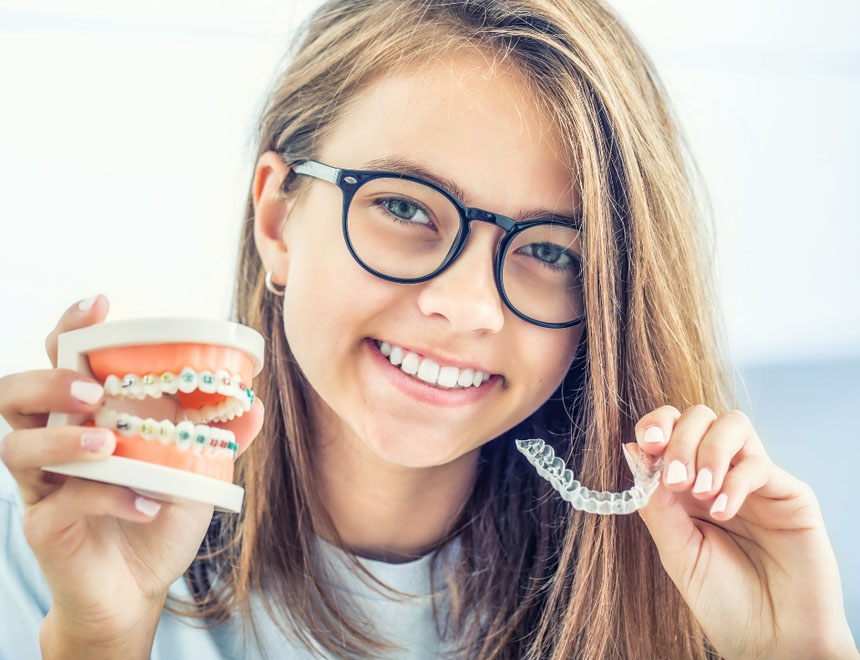
If you are wondering when to book that first orthodontic check, you are not alone. The right timing can make treatment simpler and more comfortable, and it can also give you peace of mind.
At Angle House Orthodontics in Balwyn and Doreen, Dr Gopal Kataria and our team guide children, teens and adults through personalised plans, including braces and Invisalign®. Here is how to think about timing at every age, what signs to watch for, and when orthodontic surgery might be appropriate.
When should children be assessed for orthodontics?
A first orthodontic assessment around age 7 is a smart start. At this stage, your child has a mix of baby and adult teeth, which lets us spot crowding, crossbites, bite mismatches and jaw growth patterns early. An assessment does not mean treatment will start straight away. Many children simply need monitoring so we can choose the most effective time to act.
Early interceptive treatment between ages 8 and 12 can be helpful when specific issues are present. Examples include:
- Crossbite or narrow upper jaw, where a palatal expander or an upper removable appliance can widen the arch and create space.
- Significant overbite or underbite related to jaw growth, where functional appliances such as twin block braces can guide development.
- Early loss of baby teeth, where a band and loop space maintainer can hold space for the adult tooth to come through correctly.
By guiding growth and creating space early, we can often shorten later treatment time or reduce the need for extractions. If everything looks on track, we will simply review periodically and wait for the ideal window to begin braces or Invisalign®.
Is Invisalign® suitable for children?
Yes, in selected cases. Invisalign® has options designed for growing smiles, including Invisalign® First for younger children and Invisalign® Teen for adolescents. These aligners are removable and clear, which many children and teens prefer for comfort and confidence at school and during sports.
Suitability comes down to three things:
- The type of tooth or bite movement required. Some movements are simpler with fixed braces, while many can be achieved effectively with Invisalign®.
- Growth and dental development. We consider which adult teeth have erupted and whether we can time movement with jaw growth.
- Consistent wear. Aligners need 20 to 22 hours of daily wear. Children who can wear aligners as instructed usually do very well.
If Invisalign® is not the best fit, we will explain why and outline alternatives such as ceramic braces, Damon style braces or lingual braces. We will also talk through hygiene, diet and lifestyle tips so your child finds treatment easy to manage.
The best timing for teens
Most comprehensive orthodontic treatment starts between ages 11 and 15. By this point, most adult teeth have erupted and we can correct crowding, spacing, overbites, underbites and open bites efficiently. Teens can choose from traditional braces, clear braces or Invisalign®. The decision balances treatment goals, lifestyle and personal preference.
Good indicators that your teen may be ready include:
- Crowded or overlapping front teeth.
- Prolonged thumb or finger habits that have affected tooth position.
- Difficulty biting or chewing evenly.
- Crossbite, where top teeth sit inside the bottom teeth on one or both sides.
- Teeth that stick out, which may be at higher risk of trauma.
Our first visit includes digital scans and, at our Balwyn clinic, on-site X-rays where indicated. We will show you a clear plan and discuss timeframes, comfort and costs, plus payment plan options to make treatment accessible.
Is 30 too late for braces?
Not at all. It is common for adults in their 30s, 40s and beyond to start orthodontic care, and we see excellent outcomes. Teeth can move at any age when guided by a specialist. Adults often choose discreet options such as Invisalign®, ceramic braces or lingual braces, and treatment plans can be coordinated with general dentistry or restorative work if needed.
Adult treatment can improve function, make cleaning easier and boost confidence. If you had braces as a teen and teeth have drifted, or if you missed treatment earlier, you can still achieve a healthy, stable result now. The key is a personalised plan that considers gum health, bite forces and long term retention.
What is the appropriate age for orthodontic surgery?
Orthognathic surgery, which repositions the jaws to correct significant skeletal discrepancies, is usually considered once jaw growth is complete. For most people, that is late teens to early 20s. Surgery is planned in partnership with an oral and maxillofacial surgeon and paired with braces or Invisalign® to align teeth before and after the procedure.
You might hear surgery discussed when:
- The upper or lower jaw is positioned too far forward or back for braces or aligners alone to correct the bite.
- There is a severe open bite, crossbite or facial asymmetry that affects function and appearance.
- Airway or sleep issues are linked to jaw structure.
Even if surgery is a future possibility, early assessment helps us guide growth and may reduce the extent of treatment later. If surgery becomes the recommended path once growth is complete, we will map out the steps, timeframes and expected outcomes clearly.
Signs it is time to book an assessment
- Crowding or spacing you can see.
- Difficulty biting or chewing comfortably.
- Mouth breathing, snoring or prolonged dummy or thumb habits.
- Jaw clicking, discomfort or a bite that feels off centre.
- Adult teeth that are delayed or erupting in unusual positions.
- A relapse after previous orthodontic treatment.
A check is quick and reassuring. You will leave with a clear understanding of whether to begin now, watch and wait, or plan for a future window.
How we support your next steps
Every smile starts with a free, no obligation consultation. We offer after school and Saturday appointments at Doreen, plus video consults if that suits your schedule. At Balwyn, we can complete X-rays on site when needed so you are not sent elsewhere for diagnostics. If clear aligners are right for you, I-Tero digital scanning can streamline planning and may allow a same day start.
Key takeaways
- Age 7 is the ideal time for a first orthodontic assessment. Many children will simply be monitored until the best window to act.
- Invisalign® can be suitable for children and teens when the bite goals and wear habits match the appliance. If not, braces provide an excellent alternative.
- Adults are great candidates for orthodontics. Thirty is not too late for braces or Invisalign®. Stable, healthy results are achievable at any age.
- Orthognathic surgery is generally considered after jaw growth finishes, usually in late teens or early 20s, and is paired with orthodontic treatment.
- Personalised timing matters. A free consultation with Dr Kataria and the Angle House Orthodontics team will help you understand the clearest path to a confident, healthy smile.
We are here to make the process straightforward and comfortable, from first questions to final retainers. If you are ready to explore options or want reassurance about timing, we would love to meet you. Book your free consultation today!